Quick answer
AI should not make final decisions about money, people, compliance, professional advice, client records, sensitive data, or anything your business cannot easily explain and correct.
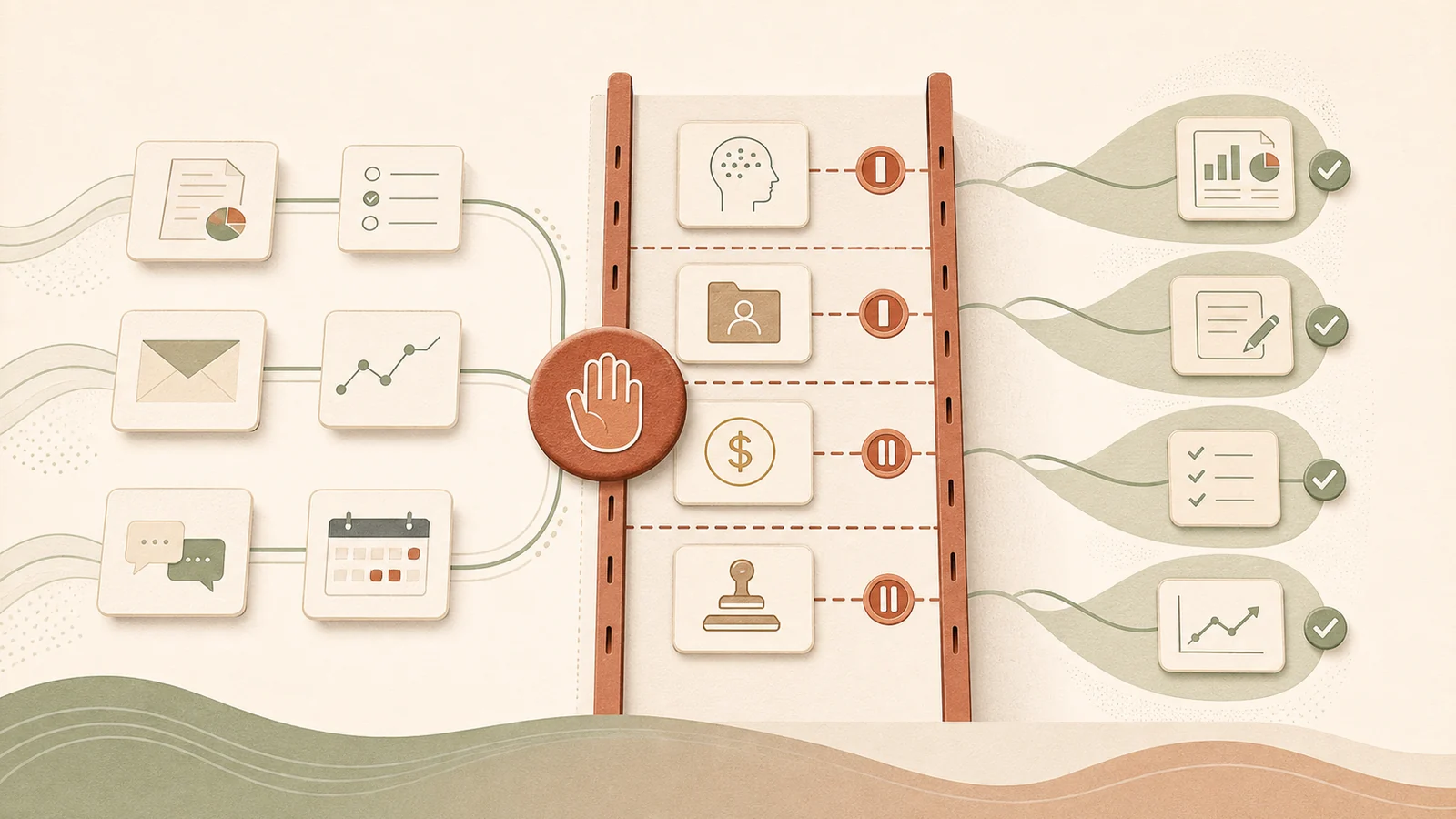
Use AI to help prepare work. Keep humans responsible for decisions.
Published: 3 July 2026.
Best for: teams setting AI boundaries before broader adoption.
Time needed: 30 minutes to define the first boundary list.
Why boundaries matter
AI adoption fails when people treat AI as either magic or dangerous.
It is neither. It is a useful tool that needs boundaries.
The clearest boundary is this:
AI can assist. A person remains accountable.
That means AI can draft, summarise, compare, organise, and suggest. It should not quietly make final calls in areas where the business owes care, judgment, or accountability.
Never let AI make final decisions about money
AI should not independently decide:
- Refunds.
- Discounts.
- Pricing.
- Credit decisions.
- Payment terms.
- Financial recommendations.
- Whether a client can afford something.
It can prepare information for a person. It can compare options. It can draft an explanation. But a person with authority should decide.
Money decisions affect trust quickly.
Never let AI make final people decisions
Be careful with staff and hiring.
AI should not make final decisions about:
- Hiring.
- Firing.
- Promotions.
- Performance management.
- Pay.
- Rostering where fairness matters.
- Disciplinary action.
AI can help organise notes, prepare interview questions, or summarise policy. It should not replace human judgment in decisions that affect someone’s work and livelihood.
Never let AI give final professional advice
If your business operates in a regulated or trust-heavy field, be careful.
AI should not be the final source for:
- Legal advice.
- Financial advice.
- Medical advice.
- Tax advice.
- Compliance decisions.
- Safety recommendations.
- Technical instructions where mistakes could cause harm.
It can help draft, research, or prepare questions for a qualified person. It should not be treated as the qualified person.
Never let AI change records without review
Business records matter.
Do not let AI independently change:
- Client files.
- CRM records.
- Accounting entries.
- Medical or care notes.
- Legal matter notes.
- Job records.
- Quotes and invoices.
AI can suggest updates. A person should check them before they become official.
This is especially important when records are used later for billing, service delivery, compliance, or client disputes.
Never paste sensitive data into unapproved tools
Your team needs a simple rule for data.
Do not paste sensitive information into tools that have not been approved for that kind of work.
Sensitive information includes:
- Client personal information.
- Health information.
- Financial details.
- Passwords.
- Access codes.
- Confidential contracts.
- Staff records.
- Private business data.
If the tool is approved for sensitive work, the team still needs to know which settings, accounts, and processes apply.
Never publish AI output without checking
AI can produce confident mistakes.
Before publishing or sending output, check:
- Facts.
- Names.
- Dates.
- Claims.
- Tone.
- Pricing.
- Links.
- Whether it sounds like your business.
This applies to websites, social posts, emails, proposals, reports, and client messages.
What AI can safely do instead
These are better uses:
- Draft a first version.
- Summarise a long document.
- Prepare a checklist.
- Compare options.
- Find missing information.
- Rewrite in plain English.
- Suggest questions to ask.
- Create a decision brief for a person.
The difference is simple: AI prepares, people decide.
Next step
Write your “never list” before rolling AI out widely.
Start with five items. Add examples from your business. Then make sure every team member knows who to ask when a use case sits near the boundary.